Government-backed loans significantly impact the real estate sector by offering secure financing with favorable terms to eligible buyers. Programs like FHA, VA, and UK's Help to Buy provide access to homeownership through lenient credit requirements, lower down payments, and fixed interest rates, proving crucial during economic downturns. Securing these loans involves pre-approval, submission of financial information, eligibility verification based on specific criteria, loan estimate review, inspections, negotiations, and closing processes. Consulting specialists enhances chances of securing competitive terms, facilitating smooth transitions into homeownership.
In today’s competitive real estate landscape, navigating the home buying process can be daunting for many aspiring owners. The high cost of properties often requires significant financial backing, yet traditional loan options may not suffice for all buyers. Enter government-backed loans – a powerful solution designed to democratize access to homeownership. These innovative financing mechanisms play a crucial role in stabilizing communities and empowering qualified individuals to secure their dream homes. This article delves into the intricacies of these loans, providing valuable insights for those seeking a competitive edge in the real estate market.
Understanding Government-Backed Loans in Real Estate

Government-backed loans have emerged as a powerful tool in the real estate sector, offering qualified buyers enhanced access to financing options with favorable terms. These loans, secured or guaranteed by governmental entities, serve as a safety net for both lenders and borrowers, reducing risk and making homeownership more attainable. In an increasingly competitive market, understanding this aspect can provide valuable insights for prospective purchasers navigating the intricate landscape of real estate finance.
One of the most prominent examples is the Federal Housing Administration (FHA) loan program in the United States. FHA loans are popular among first-time homebuyers due to their lenient credit score requirements and lower down payment mandates compared to conventional mortgages. This government backing effectively expands the pool of potential buyers, fostering a more inclusive real estate market. Similarly, the Department of Veterans Affairs (VA) loans in the US cater specifically to military veterans and eligible spouse, offering zero-down options and competitive interest rates, reflecting the nation’s commitment to supporting its service members post-service.
The benefits extend beyond accessibility. Government-backed loans often offer fixed interest rates, shielding borrowers from potential fluctuations in the market. This stability is particularly appealing during periods of economic uncertainty. For instance, data from the Federal Reserve shows that consistent government support for mortgage lending during the 2008 financial crisis played a pivotal role in stabilizing the real estate market, enabling many homeowners to weather the storm. As the real estate industry continues to evolve, these loan programs adapt to meet evolving needs, ensuring that homeownership remains a viable and accessible dream for qualified buyers.
Eligibility Criteria for Qualified Buyers

Government-backed loans, a beacon of support for qualified buyers entering the real estate market, come with stringent eligibility criteria designed to ensure responsible borrowing and sustainable homeownership. These criteria consider various factors, including credit history, income stability, debt-to-income ratios, and down payment amounts. Lenders and government agencies conduct thorough evaluations to assess borrowers’ financial health and ability to repay, thereby mitigating risks associated with non-performance.
In the United States, for instance, the Federal Housing Administration (FHA) loans are popular among first-time homebuyers due to their lenient credit score requirements, compared to conventional mortgages. However, these loans demand a minimum down payment of 3.5% and may incur mortgage insurance premiums. Conversely, Veterans Affairs (VA) loans offer eligible veterans and their spouses 100% financing with no down payment, but stringent credit standards apply. In the UK, Help to Buy schemes provide first-time buyers with equity loans, subject to income thresholds and property price caps, easing the financial burden of purchasing a home.
Understanding these eligibility criteria is paramount for qualified buyers. It involves meticulously reviewing personal financial statements, ensuring compliance with income requirements, and preparing adequate down payments. Consulting with mortgage specialists or financial advisors can offer valuable insights into meeting these standards. Additionally, maintaining a robust credit profile through responsible borrowing and timely repayments significantly increases chances of securing government-backed loans at competitive terms, facilitating smooth transitions into homeownership.
Navigating the Process: From Application to Closing
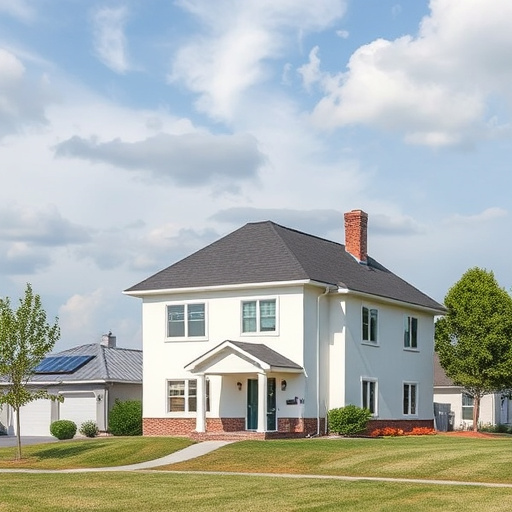
Navigating the process of securing a government-backed loan for qualified real estate buyers involves several key steps, each demanding careful consideration and documentation. The journey begins with pre-approval, where prospective purchasers consult lenders to determine their budget and qualify for specific programs like FHA, VA, or USDA loans. This initial step is crucial in the competitive real estate market, as it not only gives buyers a clear understanding of their financial capabilities but also enhances their negotiating power.
Upon selecting a property, the application process formalizes through submission of detailed financial information, employment records, and tax returns. Lenders scrutinize these documents to ensure accuracy and verify the borrower’s eligibility based on predefined criteria. For instance, FHA loans require a 3.5% down payment, while VA loans offer 100% financing to qualified veterans. USDA loans cater to rural homebuyers with low-to-moderate incomes, offering 100% financing as well. Once approved, the loan estimate is shared, outlining interest rates, closing costs, and other fees.
The next phase involves working with a real estate agent to schedule inspections and appraisals. These steps are essential for ensuring the property meets safety standards and has adequate value to support the loan. After successful inspection and appraisal, the buyer and seller negotiate terms, reach an agreement, and proceed to closing. During closing, various documents are finalized, including the mortgage contract, title transfer, and disclosure statements. This final step marks the official transition of ownership in the real estate transaction, sealing the government-backed loan process.